
Forget the soft narratives peddled by talking heads – the Miami Dolphins aren’t “giving up” on players too soon; they’re actively bleeding talent, a direct consequence of a front office rotting from the inside out and a leadership vacuum that would make a rookie GM blush. ESPN’s recent hand-wringing over Christian Wilkins’ departure misses the damn point entirely. This isn’t about premature goodbyes; it’s about a franchise in full-blown structural collapse, and the financial fallout is only just beginning.
The Exodus: More Than Just “Giving Up”
Wilkins was a beast in the trenches, a non-stop motor drafted 13th overall who delivered every single snap for Miami. His exit wasn’t a mistake; it was a glaring symptom of a deeper malaise. The Dolphins aren’t merely letting players walk; they’re forcing them to sprint for the exits, demonstrating a catastrophic failure in asset management and team building.
Look at the casualty list, a parade of foundational pieces jettisoned: Jaylen Waddle, a bona fide game-wrecker, traded to the Broncos. Tyreek Hill, a cap casualty whose explosive play was irreplaceable, cut loose. Minkah Fitzpatrick, a defensive cornerstone, dumped for pennies on the dollar. Bradley Chubb, a massive investment in pass-rushing, released before he could even earn his guaranteed money.
These aren’t minor roster adjustments. These are strategic blunders of epic proportions, each one revealing a franchise creating an environment so toxic, no top-tier player wants to endure it. This isn’t about being “too soon” to give up; it’s about a front office that can’t retain talent and a locker room that can’t hold itself together.
Tua’s Leadership Vacuum and the Locker Room Rot
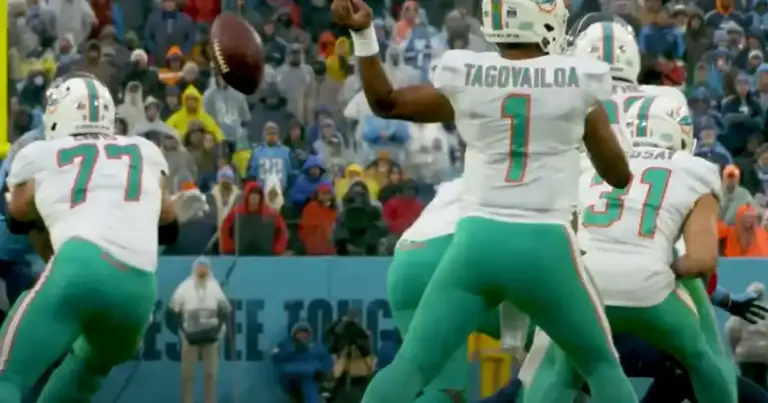
The real issue, the festering wound at the heart of this collapse, is the toxic culture brewing in Miami. Quarterback Tua Tagovailoa is squarely at the center of it.
A quarterback, the supposed field general, running to the press like a schoolboy tattle-tale after a brutal 1-5 start and his own embarrassing three-pick dud against the Chargers? That’s not leadership. That’s a five-star general abandoning his troops on the battlefield. It guts the locker room, makes the coaching staff look weak, and sends a clear message: every man for himself.
“Soft as hell,”
said former NFL running back LeSean McCoy on Speakeasy, pulling no punches. McCoy didn’t just call out Tua for airing dirty laundry; he exposed the fundamental lack of respect. “They don’t respect Tua” because he runs to the media.
Real leaders handle business behind closed doors, where trust is forged. They don’t expose their team’s cracks for public consumption; they plaster them over with grit and accountability.
Even a former Dolphins practice squad player, DaeSean Hamilton, torched Tua publicly, calling him out for being late to his own meetings. Think about that: the alleged leader showing blatant disrespect for his own time and, by extension, his teammates.
This isn’t just a bad look; it’s a damning indictment of a locker room where the alpha isn’t leading, he’s undermining. This behavior creates a fractured environment where players like Wilkins want no part, and frankly, who can blame them?
The Cap Catastrophe: Grier’s Fiscal Incompetence
This isn’t just about disgruntled players or a spineless quarterback; this is a financial nightmare of epic proportions. Miami is drowning in dead money, a self-inflicted wound that cripples any hope of future competitiveness.
The franchise is saddled with over $25 million in dead cap space, tied to 13 or more ghosts still on the payroll. This is Chris Grier’s contract apocalypse, a monument to fiscal incompetence that handcuffs the team’s ability to operate.
Twenty-five million dollars in dead cap space isn’t just a number; it’s a crippling anchor. That’s the price of a top-tier offensive lineman, a lockdown corner, or two quality starters who could actually be contributing on Sundays.
Instead, it’s paying for monuments to Grier’s mismanagement. This isn’t just about “tough cuts”; it’s about a front office that couldn’t manage a lemonade stand, let alone an NFL payroll.
When you have that much money tied to players no longer on the roster, you can’t build. You can’t compete. You are stuck in neutral, watching your best players walk because you literally cannot afford to keep them.
They don’t “give up” on players when they can’t afford to keep them. They are forced to make tough cuts. These are not strategic decisions; these are desperate moves from a mismanaged front office that created this mess and is now paying the price.
A Franchise in Freefall: The Bill Comes Due
The public reaction is brutal, and rightly so. Fans and pundits are calling this narrative “delusional cope.” They see through the spin. They understand this isn’t about isolated incidents; this is a systemic failure from top to bottom.
Emmanuel Acho, also on Speakeasy, predicts the end for both Tua and Coach McDaniel. “You shot a bullet, but it ricocheted back,” Acho stated. He’s right. Tua’s actions damaged the team’s core, and McDaniel’s inability to control the locker room chaos made things exponentially worse.
The Dolphins are not simply making bad trades; they are facing a full-blown crisis of leadership, finances, and culture. Players are fleeing. The cap is a disaster. Leadership is nonexistent. This franchise is a clown show.
So, let’s be clear: the Miami Dolphins didn’t “give up” on players; they systematically dismantled their own foundation, driven by a spineless quarterback and a front office that couldn’t manage a Pop Warner roster. This isn’t just a bad season; it’s a franchise-altering catastrophe.
The question isn’t if more talent will flee, but when the entire house of cards collapses, and who will be left holding the bill for this monumental failure?
Source: Google News