
Why MotoGP’s ‘Concorde Agreement’ Remains Unsigned: The Money Fight That Could Break the Sport
Forget the usual politeness—MotoGP’s Concorde Agreement is a powder keg ready to blow and no one’s willing to light the fuse. Behind the scenes, a ruthless battle is raging between Dorna Sports and the manufacturers, and it’s not just about cash—it’s about who controls the sport’s soul. The stakes? Over €350 million annually, and the future of MotoGP itself.
As of April 2026, this billion-euro standoff drags on with no end in sight. Why can’t these industry giants cut a deal? Because greed, control, and power are choking the paddock. The players aren’t just negotiating a contract—they’re fighting for survival.
The Hard Facts: What’s Holding Up MotoGP’s Concorde Agreement?
- MotoGP’s global commercial haul: Over €350 million annually, with digital rights booming at +20% year-over-year.
- Teams’ cut: Less than 40% of commercial revenue, despite spending upwards of €30 million per team per season just to stay competitive.
- Dorna’s offer: A 15-year fixed contract that locks revenue and commercial rights tightly under their control, no room for negotiation.
- Teams demand: Bigger slices of the pie, transparency in revenue distribution, and renegotiation clauses tied to the sport’s explosive market growth.
- FIM’s role: Mediator and guardian of integrity, safety, and the sport’s future.
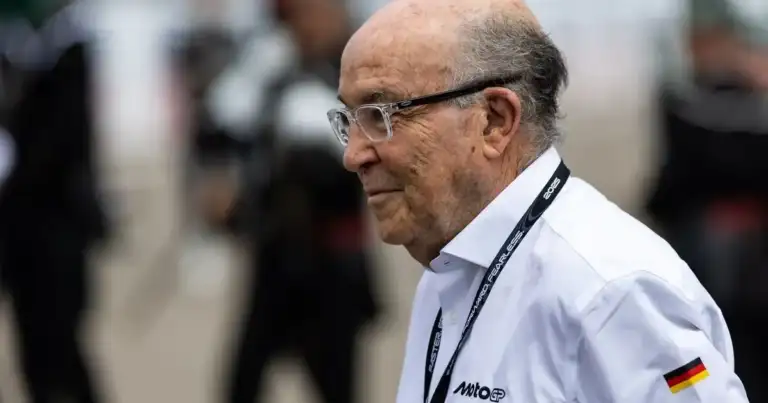
On April 6th, Carmelo Ezpeleta, Dorna’s CEO, called the deal “still a work in progress,” describing it as a “complex balancing act.” Translation? Dorna refuses to loosen its iron grip on the cash flow or power. This isn’t complexity—it’s a stalling tactic.
Behind the Scenes: A Classic Power Struggle
Dorna wants absolute control over commercial rights—think fortress, not partnership. Meanwhile, the manufacturers—Yamaha, Ducati, Honda—are bleeding money and patience. The current payout model, a flat €9 million per team, is a joke when teams shell out more than triple that just to compete.
This isn’t a minor squabble; it’s a full-blown war for the sport’s financial lifeblood. Teams want a revenue share system like Formula 1’s, where payouts reflect performance and profits—not some fixed allowance designed to keep them on a tight leash.
Remember Suzuki’s shock exit? That was a direct warning shot fired across Dorna’s bow. Sponsors and factories can’t keep footing the bill if Dorna keeps treating MotoGP like its personal cash machine. Now, the manufacturers have drawn a line in the sand. Led by Yamaha’s Lin Jarvis, the unity pact formed at the Czech GP is a clear challenge to Dorna’s dominance.
The Public Sees the Puppet Show
Fans and insiders aren’t fooled anymore. Reddit threads and forums are buzzing with frustration and sarcasm. Comments like “Unsigned? Shocker. They’ll ‘sign’ in Austin with cameras rolling” drip with cynicism. The whole saga reeks of a staged drama meant to hype Liberty Media’s ambitions of turning MotoGP into their next cash cow after F1.
Liberty Media’s fingerprints are all over this mess. But here’s the brutal truth: if the spoils aren’t shared fairly, their investment will implode. Factories might quit, top riders like Marc Márquez could stall contracts, and the sport’s momentum will screech to a halt.
The Consequences of No Deal
- Teams face crushing financial uncertainty—how many can afford to keep racing under Dorna’s suffocating terms?
- Sponsors and broadcasters demand stability; without it, they’ll pull their support faster than you can say “grid shrink.”
- Top riders could jump ship or stall signings amid the financial chaos.
- Emerging markets like Southeast Asia and India risk losing interest if MotoGP can’t guarantee a stable, thriving product.
The clock is merciless. If Dorna doesn’t loosen its death grip on commercial rights and start sharing the wealth, MotoGP’s golden age will turn to dust—and fast.
What Happens Next?
The FIM has stepped in, calling for neutral mediation—finally signaling they’re ready to break the deadlock. But will this intervention fix the mess or just add fuel to the fire? If Dorna and the manufacturers can’t find common ground, the governing body might impose regulatory measures. That could either save the sport or plunge it into deeper chaos.
One thing’s crystal clear: MotoGP can’t afford another drawn-out stalemate like 2018 or 2022. Fans deserve more than a corporate tug-of-war that sidelines riders, shrinks grids, and kills excitement.
Dorna needs to stop acting like a kingmaker hoarding power and start acting like a true partner. If they don’t, teams will push harder, sponsors will retreat, and MotoGP will spiral into chaos. This isn’t hype—it’s cold, hard reality.
So here’s the million-euro question: Will MotoGP finally sign a Concorde Agreement that’s fair and future-proof, or are we just watching another corporate power play designed to protect a few fat wallets while the sport’s future goes up in flames?
One thing’s for sure—fans aren’t buying the scripted drama anymore. The real fight is for survival.
“We want an agreement that reflects the growth of MotoGP and protects all stakeholders. It’s complex, but we remain committed to finding common ground.” — Carmelo Ezpeleta, Dorna CEO, April 6, 2026
“We need transparency and fair revenue distribution. Without that, it’s hard to justify the massive investment we make every year.” — Anonymous Team Principal, April 7, 2026
“The integrity of the sport depends on a clear framework. We support mediation to resolve outstanding issues swiftly.” — FIM Spokesperson, April 7, 2026
Hungry for more racing drama? Check out DailySportsEdit’s explosive coverage of the 2026 NASCAR season shakeups at DailySportsEdit NASCAR News.
Source: Google News