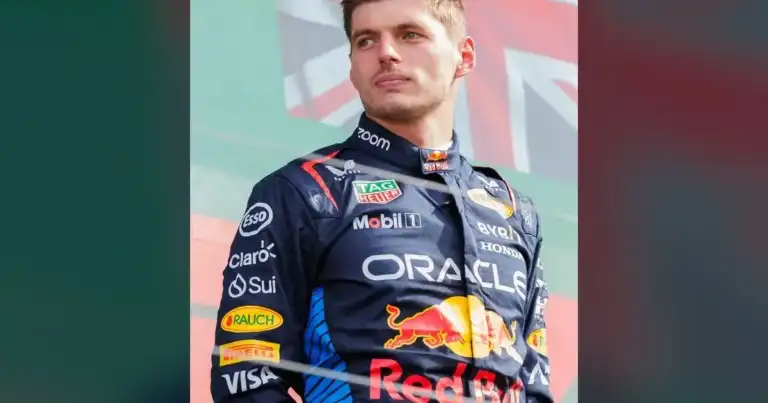
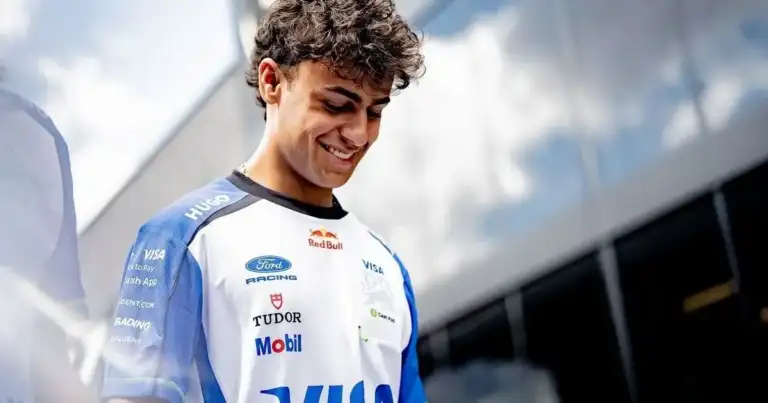
Forget the polite platitudes and the PR-polished smiles. Sergio Perez just dropped a truth bomb on Mario Andretti, calling his “rusty” claims for returning F1 drivers pure, unadulterated bullshit. This isn’t some nuanced debate about tire compounds; this is a head-on collision about whether true talent ever fades, or if some legends are just too damn stuck in the past to grasp the modern beast that is Formula 1.
The whole kerfuffle ignited when F1 icon Mario Andretti, a man whose name is synonymous with speed, dared to suggest that any driver attempting a comeback to the pinnacle of motorsport would inevitably be “rusty.” His argument? Time away from the cockpit means losing that razor-sharp edge. But Red Bull Racing‘s own Sergio Perez, fresh off a respectable 2023 season where he secured a P2 finish in the Drivers’ Championship with 285 points, isn’t just disagreeing; he’s openly scoffing at it. Perez argues with the conviction of a man who knows the current game: the core skills don’t disappear, they just need a quick polish.
THE CHECO COUNTER-PUNCH: TALENT DOESN’T EVAPORATE
Perez didn’t just offer a polite rebuttal; he delivered a haymaker. He asserted that top drivers retain their intrinsic instinct, their innate ability to push a car to its absolute limit. They might need a few sessions to acclimate to the latest technological marvels and the nuances of a new machine, but the talent, the sheer, unadulterated skill, he claims, is always there, simmering beneath the surface. It’s not like starting over from square one; it’s more like a master chef returning to their kitchen after a brief hiatus – they still know how to cook a Michelin-star meal.
“I don’t agree with that. I think if you’re a top driver, you never lose that. You might need a couple of sessions to get up to speed with the car, but the instinct, the talent, it’s always there. It’s not like riding a bicycle, but it’s not starting from scratch either.”
This statement, delivered in a recent interview, wasn’t just a casual remark; it was a direct challenge to Andretti’s entrenched view. Perez isn’t just defending himself or his peers; he’s defending the very essence of elite F1 talent against the creeping doubt that age or absence can somehow dull its brilliance. He’s putting his reputation on the line, daring to contradict a legend.
Andretti, on the other hand, likely speaks from the wisdom of decades spent at the sharp end of motorsport. He’s seen how F1 has transformed, how the physical and mental demands have ratcheted up to an almost unbearable degree. He probably believes getting back to 100% isn’t just a “big ask”; it’s a monumental, soul-crushing grind that few can truly conquer. He’s thinking about the relentless pressure, the split-second decisions, the sheer, unyielding brutality of the sport.
THE “RUSTY” MYTH: FACT OR FICTION? THE EVIDENCE IS MIXED, AND DAMNING
This “rusty” argument isn’t some fresh controversy cooked up for clicks; it’s an old chestnut in F1, and history offers compelling, often contradictory, evidence. Take Michael Schumacher‘s highly anticipated return in 2010. After a three-year sabbatical, the seven-time world champion came back with Mercedes. He showed flashes of that legendary brilliance, sure, but he never truly recaptured the old magic. Many, including Andretti’s disciples, pointed to “rust,” arguing he couldn’t replicate his championship-winning form. His best finish in those three seasons was a P3 at the 2012 European Grand Prix, a far cry from his dominant past.
Then, you have the ice-cool Kimi Räikkönen. He walked away from F1 for two years to dabble in rallying, only to return in 2012 with Lotus. What happened? He won races, including a stunning victory at the 2012 Abu Dhabi Grand Prix, and finished a remarkable third in the Drivers’ Championship, proving that for some, the competitive fire burns brighter after a break. He silenced the doubters and made a mockery of the “rusty” label.
More recently, the enigmatic Fernando Alonso made his grand comeback in 2021 after a two-year hiatus. He quickly demonstrated that his skill hadn’t diminished one iota, often outdriving his younger teammates and consistently delivering stellar performances for Alpine and now Aston Martin. Alonso isn’t just competitive; he’s often the best of the rest, proving that for certain generational talents, the “off switch” simply doesn’t exist.
So, who’s right? Schumacher’s comeback lends credence to Andretti’s skepticism. Räikkönen and Alonso, however, stand as towering examples to Perez’s conviction. The answer isn’t simple; it’s a brutal, complex cocktail of individual talent, the quality of the team, and the competitiveness of the car. It’s not a one-size-fits-all diagnosis; it’s a battle fought on a case-by-case basis, with careers and legacies hanging in the balance.
WHY THIS MATTERS BEYOND THE TRACK: THE ENDURING DEBATE OF EXPERTISE
This debate transcends the confines of F1. It’s a fundamental question about expertise: Does mastery ever truly fade into obsolescence, or can it be reignited with explosive speed? This isn’t just about racing; it applies to any high-stakes profession where peak performance is paramount. It’s a clash between the wisdom of age and the enduring power of raw talent. Andretti’s comments lean heavily towards age diminishing ability, suggesting a decline is inevitable. Perez, with the fire of a current competitor, argues that true talent, once forged, endures.
It also brutally exposes the relentless pressure cooker that is modern F1. Teams pour billions into their operations; they cannot, under any circumstances, afford a driver who needs to “get up to speed.” Every single point in the Constructors’ Championship is worth millions, impacting everything from prize money to sponsorship deals. No team principal, no matter how nostalgic, is going to gamble on a driver who might be “rusty.” The stakes are simply too high, the margins too fine.
The F1 world, from the paddock to the grandstands, is watching this unfolding drama. Drivers, team bosses, and rabid fans are all weighing in, and it tells us a hell of a lot about how this sport has evolved. It’s tougher than ever to just “jump back in.” The cars are more complex, the competition more ferocious, and the demands on a driver’s physical and mental fortitude are simply astronomical.
THE CADILLAC SHADE AND F1’S PR MACHINE: A SMOKESCREEN FOR FAILURE?
Let’s be brutally honest: this entire “debate” feels less like a genuine philosophical discussion and more like a carefully orchestrated PR stunt. Perez’s clapback barely registered a blip outside the hardcore F1 forums. Reddit and X users, ever cynical, mostly scrolled past it, dismissing Andretti’s comments as the ramblings of an old man desperately clinging to relevance. Is he trying to stir the pot, to create a distraction from Cadillac’s own reported struggles? Whispers abound of shoddy aero designs, battles with collisions, and a worrying number of DNFs in their other racing ventures. Is this whole “rusty driver” narrative a convenient smokescreen to deflect attention from Cadillac’s backmarker blues?
And Perez’s “happy with my peak” flex? That smells like pure, unadulterated PR. It’s designed to hype up a driver who, despite his P2 finish, often struggled to match his teammate Max Verstappen in 2023. It’s a calculated move to make him look good, to project an image of unwavering confidence, and perhaps, to divert focus from any perceived inconsistencies in his own performance. This isn’t a genuine exchange of ideas; this is F1’s soap opera in full, glorious swing, manufacturing drama where, frankly, there isn’t much substance.
THE UNASKED QUESTIONS THAT HAUNT THIS DEBATE
This entire manufactured spat leaves a trail of crucial, unasked questions hanging in the air, questions that cut to the very core of F1 and elite performance:
- What specific, concrete challenges does Andretti truly envision in modern F1 that make a return so difficult? Beyond the obvious fitness requirements, what technological, strategic, or psychological barriers are insurmountable?
- Is there a definitive point of no return? How long is too long away from the cockpit, even for a multi-championship winner? Is it two years, five years, a decade? Where’s the line?
- How do shrewd team principals actually weigh past glory against recent performance? When does a gamble on a returning, aging star make financial and competitive sense, and when is it a fool’s errand?
- From a sports psychology perspective, how quickly can an elite athlete truly regain their absolute peak, their “flow state,” after a significant absence? Is it merely a switch that can be flipped, or a delicate ecosystem that takes time to rebalance?
This isn’t just a simple disagreement between two F1 figures. It’s a clash of eras, a brutal debate on the very nature of elite human performance, and a stark, unfiltered peek into the constant, manufactured drama that keeps F1 fans—and cynical analysts like myself—hooked.
THE REALITY CHECK: THE TRACK IS THE ULTIMATE JUDGE
No matter what platitudes Perez spouts or what dire warnings Andretti issues, the unyielding truth is always found on the track. If a driver comes back and performs, consistently delivering results, they silence the critics, they obliterate the “rusty” label, and they cement their legend. If they struggle, if they falter, if they can’t keep pace, then the “rusty” label sticks like superglue, and their legacy takes a hit. It’s that simple, that brutal, that unforgiving. F1 is not a sport for sentimentality; it’s a coliseum where only the strongest survive. You either have it, or you don’t. And if you don’t, you’re not just out; you’re forgotten, swallowed by the relentless march of progress and the next generation of hungry, fearless talent.
Source: Google News