
The NHL’s Department of Player Safety isn’t just a joke; it’s a full-blown farce, a tragicomedy where star power trumps player well-being every single time. They didn’t just let Auston Matthews off the hook; they practically handed him the fishing rod and wished him luck. Chris Pronger, a man who knows the brutal ballet of the ice better than most, nailed it: it’s a “crapshoot” – and a rigged one at that.
This latest egregious dereliction of duty proves, beyond a shadow of a doubt, that the league cares more about glittering marquee names than the precious grey matter inside its athletes’ skulls. Matthews, the golden boy of the Toronto Maple Leafs, delivered a high hit on Boston Bruins defenseman Charlie McAvoy, a blow that sent shivers down the spines of anyone who values player safety. The consequence? A measly two-minute minor. Two minutes! For potentially altering a man’s career, his life!
Star Treatment: A League-Wide Sickness
On April 1st, 2026, the date etched in infamy for this decision, Matthews’ impact on McAvoy was not just “ugly”; it was a visceral, sickening thud heard across the hockey world. McAvoy, a warrior, eventually returned to the game, but the damage to the league’s credibility, its very soul, was already done. It was irreparable.
Then came the announcement, or rather, the non-announcement that screamed volumes: the NHL Department of Player Safety (DoPS) declared no supplementary discipline. Zero. Not a suspension. Not even a paltry fine. This decision didn’t just cause outrage; it ignited a wildfire of disbelief and righteous anger from every corner of the hockey universe.
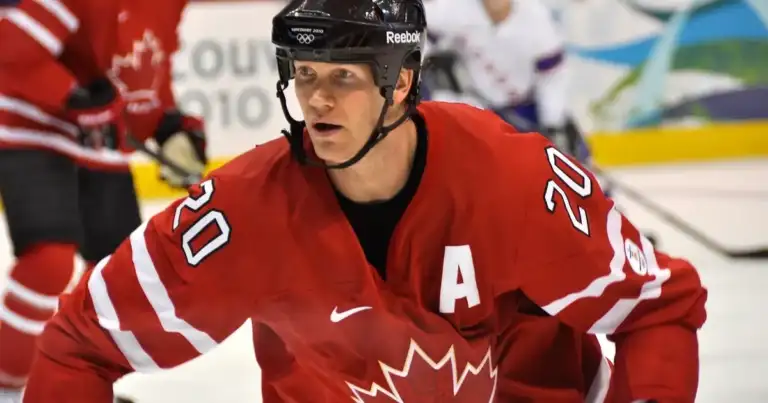
Enter Chris Pronger, a titan of the game, a man whose very name conjures images of unyielding physicality and uncompromising play. He didn’t just “rip into” the DoPS; he eviscerated them with surgical precision. He called their decisions “arbitrary,” a word that barely scratches the surface of their bewildering inconsistency. He called out their “inconsistency” with the weary sigh of someone who’s seen this charade play out countless times. Pronger, with his eight career suspensions, knows the fine line between aggression and recklessness. His words aren’t just opinions; they are pronouncements from a high priest of the game, and they carry the weight of a thousand body checks.
He told reporters on April 2nd, 2026, with a tone that mixed exasperation with bitter resignation, that it “feels like a crapshoot sometimes.” How can a league justify suspending a fourth-liner for a glancing blow while a superstar like Matthews gets a free pass for a headshot? What message does that send to the impressionable young players watching from home, dreaming of NHL glory? It sends a terrible, dangerous, and utterly corrupt message: talent grants immunity.
The Hypocrisy on Ice: A Mirror to the League’s Soul
Some might point to Pronger’s own storied history of suspensions and cry “hypocrite!” I call him a realist, a battle-hardened veteran who understands the brutal calculus of the ice. He played the game at its most intense, its most unforgiving. He knows where the lines are drawn, and more importantly, he knows when the league, in its infinite wisdom, conveniently “forgets” to draw them for its chosen few.
He is not a lone voice in the wilderness. Across social media, in locker rooms, and in sports bars from Helsinki to Halifax, fans and former players alike echo his sentiments. The DoPS is not just a mess; it’s a festering wound on the integrity of the sport. They are failing, spectacularly, to protect the very athletes they claim to safeguard. Instead, they allow the dazzling glow of star power to dictate discipline, creating a two-tiered system of justice that would make a medieval monarch blush.
And who benefits from this egregious favoritism? Auston Matthews, for one. He pulls in a staggering $11.64 million a year. A suspension, even a short one, would hit his wallet hard. It benefits the Maple Leafs, who get to keep their generational talent on the ice, boosting ticket sales and TV ratings. And, let’s be brutally honest, it benefits the NHL’s bottom line. Star players in lucrative markets mean more eyeballs, more merchandise sales, more corporate sponsorships. More money. But at what cost? At what point does the pursuit of profit overshadow the moral imperative to protect human beings?
The Real Losers: The Players and the Game Itself
The real, undeniable losers in this cynical equation are the players themselves. Guys like Charlie McAvoy, who took a dangerous high hit and was then told, implicitly, by the league that his safety is secondary to someone else’s star power. The league shrugged, a collective, indifferent gesture that screams, “Carry on, nothing to see here!” This not only encourages dangerous play but actively dismisses the long-term health and well-being of its most valuable assets.
The NHL is constantly under scrutiny, facing immense pressure over head injuries and the specter of concussion lawsuits that loom like storm clouds on the horizon. They issue press releases, commission studies, and make grand pronouncements about their commitment to player safety. Yet, their actions, particularly in cases like Matthews’, expose the hollow hypocrisy of those words. They claim to care, but their decisions say otherwise, loudly and unequivocally.
Sheldon Keefe, the Maple Leafs coach, predictably dismissed it as a “hockey play,” claiming Matthews had “no intent.” A convenient narrative, wouldn’t you say? Jim Montgomery, the Bruins coach, ever the diplomat, simply called it a “high hit” and left it to the league to decide. And decide they did – by doing absolutely nothing. The league failed, not just McAvoy, but every player who steps onto the ice expecting a modicum of protection from reckless acts.
The DoPS statement, when it finally trickled out, was a masterclass in obfuscation: “Considering all relevant factors.” “Speed of the play.” “Immediate reaction.” These aren’t reasons for inaction; they are flimsy, transparent excuses designed to deflect criticism and maintain the status quo. This isn’t an isolated incident; it’s a recurring nightmare, a pattern of inconsistency that has plagued the DoPS for years. They preach one thing and practice another, a disconnect so profound it borders on the absurd.
A Department of Confusion: The NHL’s Self-Inflicted Wound
The NHL’s Player Safety Department isn’t just a department of confusion; it’s a department of self-inflicted wounds. Their rules seem to shift with the wind, their enforcement a capricious lottery. Or, worse, it changes without any discernible reason, leaving players, coaches, and fans alike scratching their heads in bewildered frustration.
This chronic lack of transparency isn’t just frustrating; it actively harms the game. It erodes faith, making fans question the very integrity of the sport they love. It leaves players wondering if they are truly protected, or if their careers, their health, are merely expendable collateral in the pursuit of entertainment and profit.
Think about the young players, the aspiring stars, who watch these decisions unfold. What insidious lessons are they absorbing? That if you’re a superstar, the rules bend, perhaps even break, for you? That physical play, even dangerous physical play, is acceptable as long as you’re famous enough to generate buzz? This trickle-down effect is not just dangerous; it’s a breeding ground for more reckless, more injurious play, turning the beautiful game into a gladiatorial spectacle where the rules are selectively applied.
The league desperately needs a seismic shift. It needs clear, unambiguous rules that apply to everyone, from the first-line center to the fourth-line grinder. It needs consistent, unflinching enforcement that doesn’t buckle under the weight of star power or market influence. It needs to protect all players, not just the ones whose jerseys fly off the shelves. Pronger, in his blunt, uncompromising wisdom, is absolutely right. The DoPS isn’t just broken; it needs a complete overhaul, a radical reinvention. It needs to be fair, it needs to be consistent, and it needs to prioritize human safety above all else. Otherwise, “player safety” will remain nothing more than a cynical punchline, and the NHL will continue its disgraceful dance, prioritizing profit over the well-being of the very athletes who make the game possible. It’s a travesty, an absolute disgrace to the sport we cherish.
Source: Google News