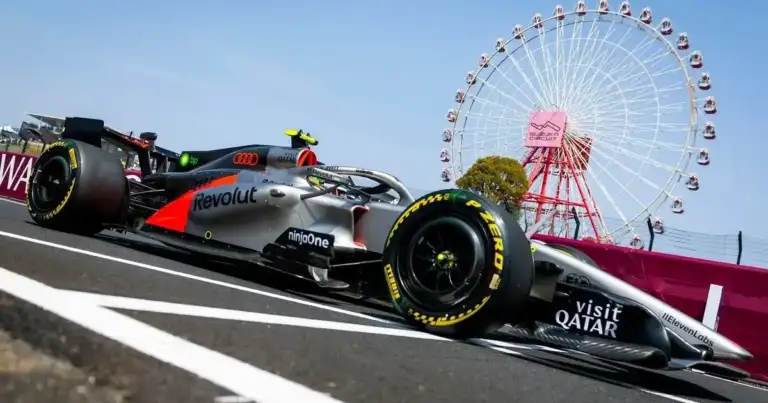

Forget the polished press releases and the slick corporate promises; Audi’s Formula 1 engine program isn’t just struggling, it’s a full-blown, unmitigated disaster. Anyone expecting a miraculous turnaround before 2026 needs a reality check. Sources deep within the paddock are screaming, “miracles are not possible” to fix this train wreck quickly. This isn’t a minor hiccup; it’s a fundamental, catastrophic miscalculation that threatens to turn their grand F1 entry into an embarrassing spectacle.
The whispers have morphed into a deafening roar. Insiders are spilling the beans, confirming what many suspected: Audi’s power unit is lagging so far behind, it’s not even in the same zip code as their competitors. We’re talking a gaping performance chasm that no amount of spin can cover up. This isn’t about tweaking a few settings; this is a deep-seated, structural design flaw that screams “disaster in the making.”
The Engine Is a Lemon: Audi’s Self-Inflicted Wound
Audi, in their infinite corporate wisdom, believed they could waltz into the most technologically demanding sport on the planet. They genuinely thought their colossal bank balance would buy them instant success. They were dead wrong. The stark, undeniable truth? Their engine development is not just behind; it’s wallowing in the gutter.
- Massive Power Deficit: Unofficial paddock whispers, corroborated by multiple sources, put them a staggering 30-50 bhp down. In F1, where races are won and lost by milliseconds, that’s not just a disadvantage; it’s a death sentence. It’s a lifetime of performance they’re missing.
- Talent Drain: The rats are abandoning the sinking ship. Motorsport.com explicitly reported a hemorrhaging of mid-level engineers. Why would top talent stick around a program that’s clearly floundering, destined for mediocrity, or worse?
- Zero Experience: They’re building this from the ground up, a Herculean task in F1. Mercedes, Ferrari, and even Red Bull Powertrains had decades of institutional knowledge, or at least the formidable brain trust of Honda to lean on. Audi? They started with nothing but a blank sheet and a delusional sense of entitlement.
The Neuburg an der Donau facility is a gleaming, state-of-the-art monument to ambition. But a shiny building, no matter how expensive, cannot conjure F1-level expertise out of thin air. You can’t buy institutional memory. You can’t fast-track decades of F1 engine development. It’s a harsh lesson Audi is learning the hard way.
The Internet Roasts Audi: Fans See Through the BS
Social media, that unfiltered arena of public opinion, isn’t holding back. The F1 faithful are tearing Audi to shreds, and frankly, they’re right to do so. This is the inevitable consequence when corporate arrogance collides with the brutal reality of Formula 1.
“Audi thought buying Sauber = instant wins? Lmao, welcome to F1 reality,” one r/formula1 user savagely blasted. That post didn’t just get attention; it racked up over 20,000 upvotes. Fans aren’t stupid. They can smell corporate hype from a mile away, and they’re seeing the chasm between Audi’s grand pronouncements and the horrifying truth.
Remember those “testing” shakedowns in Barcelona? They were less shakedowns and more public humiliations. Bortoleto’s car managed a paltry 27 laps before a gearbox failure. Hulkenberg’s hydraulic DNF after a pathetic five laps. This isn’t testing; it’s a dark comedy of errors. Even former Ferrari boss Mattia Binotto, a man not prone to hyperbole, admitted to a “very, very long list” of problems plaguing the program. This is not the sign of a healthy, competitive endeavor.
The contrast with Red Bull Powertrains (RBPT) is absolutely brutal. RBPT, which some fans derisively call “literal newbies,” is not only testing smoothly but is already delivering competitive power units. They wisely inherited Honda’s invaluable intellectual property. Audi, on the other hand, started with a blank page and a fat checkbook, believing that money alone could buy genius. Guess which strategy is actually yielding results?
“RBPT (literal newbies) humiliating Audi? Peak irony—Ford partnership mogs VW engineering,” one commenter sneered. The truth, as always, hurts.
The Cost Cap Lie: You Can’t Just Throw Money at This
Audi has pockets deeper than the Marianas Trench. We all know that. But the F1 cost cap isn’t some polite suggestion; it’s a hard, immovable barrier. You cannot simply unleash unlimited cash to solve your problems. Every design iteration, every dyno test, every new hire is meticulously scrutinized and accounted for. This isn’t just a speed bump; it’s a concrete wall that prevents any “miraculous” fixes from being implemented at hyper-speed.
An anonymous senior F1 technical director, speaking to The Race on March 31st, laid it bare:
“The scale of the deficit they’re facing isn’t something you can engineer away with a few clever tweaks. It requires fundamental redesigns, and that takes time – time they don’t really have before 2026.”
“Time they don’t really have.” That’s the devastating kicker. They’re already playing catch-up from an impossible position. You can buy engineers, you can buy facilities, but you absolutely cannot buy time in Formula 1.
History Repeats: Toyota and Honda’s Dire Warning
Audi isn’t the first automotive titan to stumble spectacularly in F1. History is littered with the corpses of corporate giants who thought their road car prowess translated directly to F1 glory.
- Honda (2015-2017): Their return with McLaren was an unmitigated catastrophe. Three years of agonizing pain, endless engine failures, and a chronic lack of power. It was a disaster that nearly destroyed McLaren’s reputation. They only clawed their way back to success by linking up with Red Bull, essentially becoming a supplier rather than a full factory team.
- Toyota (2002-2009): They poured endless money into their F1 program, building custom facilities and hiring the best talent. The result? Zero wins. Not even a sniff of a championship. Despite unlimited resources, they never cracked the code.
These were massive car companies, titans of industry, with resources that dwarfed many F1 teams. They had pedigree, engineering might, and a burning desire to win. And yet, they failed to crack the F1 engine code quickly. Does Audi truly believe they are different? Do they think they possess some magical immunity to F1’s brutal realities? Get real.
Sauber’s Sad Future: Dragged Down by Audi’s Folly
Spare a thought for Sauber. They’ve hitched their wagon to Audi’s star, and right now, it looks like a catastrophic bet. They’re staring down the barrel of being saddled with an underperforming, unreliable engine, and it will drag them into the depths of the grid.
This isn’t just an engine problem; it’s a team-wide crisis. Driver recruitment will become a nightmare. What top-tier talent wants to commit their career to driving a lemon? The best drivers will run a mile, leaving Sauber to scramble for scraps. This isn’t just Audi’s problem; it’s Sauber’s problem too, and their 2026 season could be stillborn before it even begins.
The Unspoken Truth: Why This Matters Beyond Audi
This isn’t just about Audi’s corporate ego. It’s about the integrity of F1 itself. We, the fans, crave strong competition. We want new manufacturers to succeed and push the boundaries. But we don’t want to see a brand buy its way to the grid only to flounder spectacularly.
A struggling, embarrassing Audi entry makes F1 look bad. It sends a chilling message to other potential manufacturers, deterring them from even considering an entry. It starkly illustrates the sheer impossibility of simply buying your way to the pinnacle of motorsport. This isn’t some glossy marketing exercise; this is raw, unforgiving engineering at its most brutal.
Audi’s vaunted brand reputation is on the line. They are a global powerhouse, synonymous with precision engineering and performance. A humiliating F1 debut will sting, not just financially, but deeply. It will force people to question their engineering prowess, their strategic foresight, and their very understanding of what it takes to compete at the highest level.
Andreas Seidl, Audi F1 CEO, continues to spout the predictable corporate platitudes. He talks about “long-term vision” and “steady progress.” But the anonymous sources, the ones actually doing the dirty work, tell the real story. The progress isn’t steady; it’s stalled, bogged down in fundamental issues.
The undeniable truth? Audi massively underestimated Formula 1. They thought money and a prestigious badge were enough to conquer the most challenging engineering arena on the planet. They were wrong. And now, they’re paying a hefty, public price. Don’t expect a miracle. Expect a mess.
Source: Google News