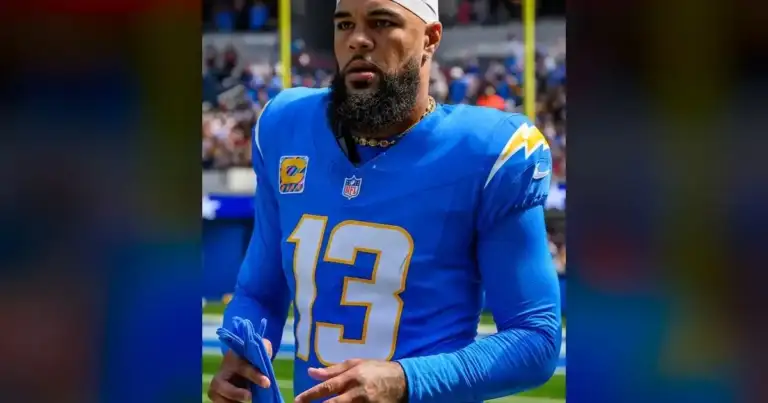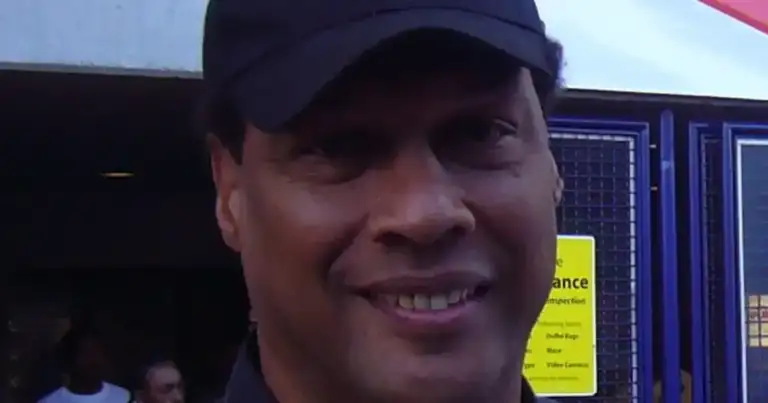

The death of Joey Browner is not merely a cruel hoax, it is a digital desecration, a viral lie that rips at the very fabric of truth and decency. This isn’t just “fake news”; it’s a venomous assault, exposing the darkest corners of internet virality where the rush for clicks obliterates respect for true legends and their unsuspecting families.
This “news” is an abomination, a stain on the digital landscape. NFL legend Joey Browner is emphatically not dead. The internet’s insatiable hunger for sensation has, once again, spewed forth a vile, baseless fabrication, attempting to extinguish the light of a living icon for the sake of fleeting attention.
The malicious claim asserts that Joey Browner, a revered Minnesota Vikings icon, passed away at the age of 65. It even goes so far as to suggest the Vikings mourn a “second icon in two days,” a calculated ploy to amplify the tragedy. This entire narrative is a fabrication, a cruel, cynical act of digital necromancy designed to shock and mislead.
There is absolutely no truth to this whatsoever. Joey Browner, born on May 15, 1960, is alive and well, enjoying the life he built after a storied career. His family and friends deserve far better than this ghoulish digital assault, this macabre dance on a living man’s reputation.
The Sinister Craft of a Digital Hoax
This fake headline is not merely shoddy journalism; it is a masterclass in internet garbage, a carefully constructed trap. It preys on raw human emotion, grabbing attention with bold, dramatic claims that scream for immediate engagement. It’s designed for one thing, and one thing only: to ensnare unsuspecting users and generate clicks, no matter the human cost.
The insidious claim of a “second icon in two days” is a classic trick, a psychological lever pulled to imply a tragic, ongoing narrative. It attempts to weave the lie into recent grief, making the fabrication seem more plausible, more devastating. But a quick, honest check bursts this bubble of deceit with the force of a Browner tackle.
Wikipedia, that digital keeper of facts, confirms Browner’s birthdate, a simple, undeniable truth. No credible news outlet, not Reuters, not the BBC, not The New York Times, has reported his death. This isn’t just misinformation; this is pure, unadulterated fiction, conjured from the ether of bad intentions.
This isn’t just harmless gossip or a minor misunderstanding. It’s a direct, painful attack. It inflicts emotional distress on a living person, forcing them to confront their own mortality in the most public and disrespectful way. It causes immeasurable anxiety and pain to their loved ones, who are left to wonder about the source and spread of such a vile untruth.
This incident highlights a fundamental, terrifying problem in our hyper-connected world: the speed of information now routinely outpaces the truth. Lies, like wildfire, spread faster and further than facts, leaving a trail of confusion and cynicism in their wake. This is the dark, unsettling side of social media, where virality often trumps veracity.
The Internet’s Morbid Fascination with Fictional Demise
Why do these death hoaxes, these digital specters, continue to haunt our screens? The answer is depressingly simple: engagement. Shocking news, particularly news of a celebrity’s untimely demise, generates immediate, explosive engagement. Tragic stories go viral, shared and retweeted with a fervor that often bypasses critical thought. The truth, in this digital gold rush, is often left behind, a forgotten casualty.
Yet, there’s a glimmer of hope in the discerning eye of the public. Users on Reddit and X (formerly Twitter) didn’t hesitate; they immediately called this out, recognizing it for the scam it was. They understand the game, the nefarious motives behind such posts, and they are not afraid to call foul.
These digital truth-tellers slammed it as “AI-slop death hoax,” a phrase that perfectly captures the soulless, algorithm-driven nature of such content. They correctly identified it as “grief-farming clickbait,” a term that cuts to the heart of the motive: profit from manufactured pain. These terms are not mere insults; they are precise diagnoses of a digital disease.
The comments sections, often a cesspool of negativity, here became a bastion of common sense and righteous indignation. “Stop killing legends for engagement,” one user wrote, a plea echoing the frustration of millions. “Check Wikipedia first, idiots,” another retorted, a simple, yet powerful reminder of basic journalistic due diligence. That is the public’s real voice, a roar against the tide of digital deceit.
This isn’t an isolated incident, a mere anomaly. We’ve seen similar hoaxes before, a chilling pattern of digital ghoulishness. Remember the fake Randy Moss death rumors, or the countless other celebrities prematurely dispatched by anonymous keyboard warriors? This is the same playbook, the same cynical strategy, repeated ad nauseam, proving that some lessons are never learned by the purveyors of digital dirt.
Joey Browner: The Unvanquished Legacy of a True Viking
Let us, for a moment, turn our attention away from the digital shadows and towards the radiant light of the real Joey Browner. He was not just a player; he was a force of nature on the gridiron, a safety for the indomitable Minnesota Vikings. He graced the field from 1984 to 1991, leaving an indelible mark on the franchise and the sport.
Browner was a true gridiron warrior, a six-time Pro Bowler, an honor reserved for the league’s elite. His career statistics speak volumes: 37 interceptions, a testament to his uncanny instincts and ball-hawking prowess. He was a genuine star, a defensive maestro whose every move was a masterclass in anticipation and execution. His stats don’t just speak; they sing the praises of a bygone era of defensive dominance.
He played a tough, physical game, embodying the grit and ferocity that defined an era of hard-hitting football. Players like Browner weren’t just components of a team; they were the very soul of their teams, their presence alone striking fear into the hearts of opposing offenses. He was an ironman, a relentless competitor who left everything he had on the field, game after game, season after season.
His illustrious career concluded with the Tampa Bay Buccaneers in 1992, after which he largely stepped away from the relentless glare of the spotlight. It is this very retreat into a well-deserved private life that, ironically, makes him an easy target for these digital vultures. His lower post-career profile, his quiet dignity, paradoxically makes him “perfect troll fodder,” as one astute user put it. He’s not constantly in the news, not perpetually in the public eye, which makes a fake death harder to immediately debunk for those not intimately familiar with his current status. This silence, a mark of his humility, is exploited by those who thrive on chaos.
The Collateral Damage of Virality
This hoax is not a victimless crime; it has real, tangible consequences that reverberate far beyond the immediate shock. It damages trust, eroding the very foundation upon which informed public discourse is built. It makes people question all news, fostering a pervasive climate of cynicism and disbelief, where truth itself becomes a subjective commodity.
Mainstream media, regrettably, also gets caught in the crossfire. When legitimate news organizations, in their haste to keep up, even flirt with these unsubstantiated rumors, they lose credibility, becoming unwitting accomplices in the spread of misinformation. They become, in essence, part of the problem, blurring the lines between legitimate reporting and digital gossip.
This incident is a stark, undeniable reminder: we must become more critical consumers of news, more discerning users of the digital ocean. We must question everything we see online, holding every claim to the fire of scrutiny. We must verify before we share, understanding that a single click can amplify a lie to a global audience.
The terrifying ease with which fake news can be created and disseminated is a modern horror story. A few keystrokes, a malicious thought, and a global lie is launched, sailing across the internet with devastating speed. The damage, both emotional and societal, can be immense, leaving scars that linger long after the initial shock fades.
Think, for a moment, of the emotional toll on Browner’s family. Imagine the sickening lurch in their stomachs upon seeing such a headline, the frantic calls, the desperate search for reassurance. It’s a sickening thought, a violation of privacy and peace. This isn’t entertainment; it’s a form of digital abuse, a cruel psychological torment inflicted by anonymous cowards.
Protecting Our Gridiron Gods
The NFL, the very institution built on the backs of these giants, has a moral and ethical duty here. They must protect their former players, their living legends, from such malicious attacks. They must speak out, loudly and unequivocally, against these hoaxes. They must stand up for their heroes, for the men who built the league into the colossus it is today.
The Minnesota Vikings, the team Browner so proudly represented, should address this directly, not with a whisper, but with a roar. They should confirm, beyond any shadow of a doubt, that Joey Browner is alive and well. They should condemn this malicious act, not just as a matter of public relations, but as a demonstration of their loyalty to their own.
Current Vikings players, from the electrifying Jordan Addison to the stalwart Christian Darrisaw, might not know Browner personally, but they stand on the shoulders of giants like him. They benefit from his legacy, from the foundation he helped lay. An attack on a former legend is an attack on the very history they inherit.
This type of attack, this digital assassination, affects all former players, making them vulnerable, making their families vulnerable to the whims of internet trolls. This cannot be tolerated; it must be met with a united front of condemnation and protection.
The entire football community, from the commissioner’s office to the most ardent fan, must unite against these lies. We must fight for truth, for respect, for the dignity of our heroes. We owe it to them, the men who sacrificed their bodies and souls for our entertainment, to protect their names and their peace.
A Resounding Call for Digital Responsibility
Social media platforms, the very conduits through which these falsehoods spread, bear an undeniable, heavy responsibility. They allow these hoaxes to proliferate, to metastasize, all while profiting from the engagement they generate. They must, without question, do more, much more.
They need not just better moderation, but faster, more proactive fact-checking mechanisms. They need to prioritize truth over clicks, integrity over engagement metrics. This isn’t just a business imperative; it is a moral imperative, a fundamental obligation to the users they claim to serve.
This incident is a blaring wake-up call, a siren in the digital night. We are drowning in misinformation, a sea of lies threatening to engulf us. We need to fight back, not just as individuals, but as a collective. We need to demand better from the platforms, from the content creators, and most importantly, from ourselves.
Joey Browner is not dead. Let that be the final, irrefutable word, etched in the digital annals. The internet, in its endless quest for sensation, tried to kill a legend. It failed, spectacularly and shamefully.
This is a stark, bruising reminder of the wild, untamed frontier that is online news. We must be smarter, more vigilant, more discerning. We must be tougher in our pursuit of truth, and we must, with every fiber of our being, protect our truth from the digital barbarians at the gate.
Source: Google News